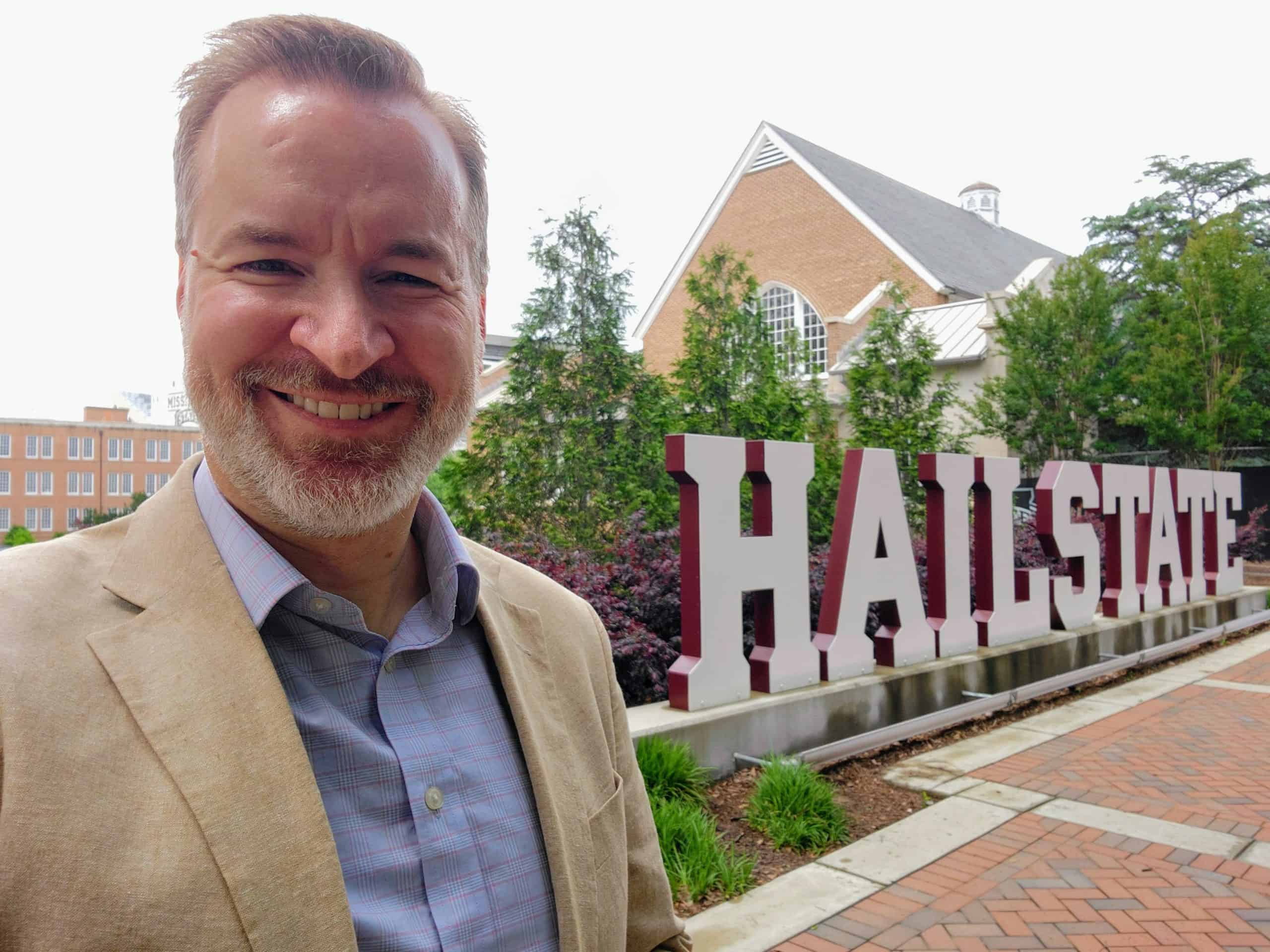
Interview: Stefanie Harger Gardner, clarinetist and #clarequality activist

Dr. Stefanie Harger Gardner teaches clarinet, chamber music, and music theory at Glendale Community College and Ottawa University. Previously she served on the faculty at Northern Arizona University. Gardner has performed with Arizona Opera, the Phoenix Symphony, Red Rocks Chamber Music Festival, Seventh Roadrunner, the Paradise Winds, and the Égide Duo, whose mission is to commission, record, and perform music inspiring social change. During her time as chair of the International Clarinet Association New Music Committee, Stefanie founded and organized the biennial ICA Low Clarinet Festival and the annual ICA New Music Weekend. She has performed in concert with PitBull, Ceelo, Tony Orlando, Reba McEntire, Michael Bolton, David and Katherine McPhee Foster, Jordin Sparks, Weird Al Yankovic, Hanson, and The Who. Her chamber music albums are recorded on the Soundset label and can be heard on iTunes, Spotify, and YouTube. In 2012, Gardner won first prize at the International Clarinet Association Research Competition with her study, “An Investigation of Finger Motion and Hand Posture during Clarinet Performance.” Gardner received Bachelor, Master, and Doctor of Musical Arts degrees in Clarinet Performance from Arizona State University, studying with Robert Spring.

Here’s my interview with Stefanie:

BP: What is #womenplayclarinettoo?

SHG: I’m lucky to have a strong network of women all over the world speaking up about female representation in the clarinet community: Sarah Watts, Julia Heinen, Carrie RavenStem, Dawn Lindblade-Evans, Lara Diaz, Marta Kania, Fie Schouten, Kristine Dizon, Larkin Sanders, and many others. We use this hashtag to promote clarinet events embracing equality and to call out events lacking in representation of women and other marginalized populations. We are actively working together to ensure the future of clarinet is welcoming of all underrepresented populations (races and ethnicities, gender diversity, sexual orientations, and those with disabilities). In short, we are a coalition of worldwide clarinetists using our voices to demand change. 

Why did you start #womenplayclarinettoo? 

The hashtags #womenplayclarinettoo and #clarequality grew out of frustrations that women and other marginalized groups have been excluded in recent clarinet events. In just April and May of 2023, there were at least 24 international festivals with male-only faculty, jurors, or guest artists. 

We publicly asked the organizers and panels of these events on social media “Where are the women?” Many organizers did not reply, deleted our comments, emailed us or privately messaged us threats, or, even worse, said that they only hired the best faculty and artists (implying that women can’t play or teach as well as men). We have asked sponsors to think carefully about supporting these events, and how that reflects on their company and their consumers. 

What are the goals of #womenplayclarinettoo and #clarequality?

We believe that our clarinet community is made stronger by the diversity within it. Events within our community should represent our diverse makeup and be accessible to all. We are inviting all clarinetists to join us by taking this pledge:

“I am an ally and advocate for equality and diversity in the worldwide clarinet community. I will inquire about, support and insist on increased visibility and opportunity for underrepresented populations; races and ethnicities, gender diversity, sexual orientations, and those with disabilities in events and programs that I take part in.”

Clarinetists and sponsors can sign the pledge at clarequality.com and have their name listed on the website as allies for equality. There are “next steps” to becoming an ally listed on the website as well. 

What are some of the ways gender inequities are manifested in the world of clarinet playing?

Many women in the international clarinet community have come forward with personal stories of inequity, harassment, and even sexual abuse by male colleagues and teachers.

The #womenplayclarinettoo movement has met resistance from some men in the clarinet community. Some have told us to “be more ladylike,” “stop shouting,” or “plan your own events” (excuse me, but we do!), or warned us we are “burning bridges.” Others have threatened lawsuits and changed our slogan to “B****es play clarinet, too!”

Asking nicely or ignoring the issue has not brought change. With our campaign, we are finally getting festival organizers and sponsors to think carefully about their rosters and programming, and getting allies to spread the word and speak up for us too.

What experiences have you had with gender inequity as a female-identifying clarinetist? 

In addition to never having a female teacher or role model, I am often the only woman in the clarinet section. It is rare for me to play with another professional female-identifying clarinetist in orchestras and other gigs. I’ve been attending ICA festivals for decades now, and it has only been in the past 5 years or so that we have had women headliners at the night concerts. I can recall past years like 2016 when there were zero women soloists at the coveted night concerts.

I want my diverse clarinet studio (primarily female, Hispanic, and LGBTQIA+) to see themselves in the performers they admire and want to study with. I don’t want my students to feel like they don’t belong in the clarinet community because they don’t look the same as the teachers or artists in the poster, or that they can’t be professional clarinet players too.

When with my spouse, Joshua Gardner (another professional clarinetist) at music festivals, I am often introduced as “Josh’s wife” and rarely introduced as another clarinet player or even by my name. (To be clear, Josh never introduces me this way, but other males in the clarinet community often do.) 

The low clarinet community used to be very male dominated, but in recent years has been a very accepting community of all marginalized players with the work of Sarah Watts, Jon Russell, and the very first ICA Low Clarinet Festival. 50.6% women low clarinet artists performed at the festival last January.

Has there also been positive response to #womenplayclarinettoo and #clarequality?

The ICA has taken notice of the #womenplayclarinettoo and #clarequality movement. Many of the board members use profile picture frames, created by Carrie RavenStern, for their social media accounts. They also worked with us to create a powerful diversity statement to remind the international clarinet community that we are an inclusive community.

Where can people find you on the internet?

Where can people find #clarequality and #womenplayclarinettoo on the internet?

Similar Posts

  • Getting gigs on woodwind doubles

    Here’s a question sent to me recently [edited lightly]:

    Do you have any advice on getting gigs on doubles? I play all the major modern woodwinds, but I’m definitely an oboe/English horn player first, and saxophone is my strongest double. I wouldn’t say I’m the best flute or clarinet player, but I’m good enough to gig or perform solo repertoire. I never get gigs on anything but oboe/English horn or saxophone, which makes me feel like I’m wasting my time practicing anything else.

    Here are a few things to consider:

    Firstly, hopefully it goes without saying, but continue developing your skills on your doubles.

    Developing a reputation in your local market takes time. Plus, your local ecosystem of musicians and gigs is a factor outside your control. For example, if there is already an abundance of well-established clarinetists in local contractors’ contact lists, then it may just take time before you get a shot.

    Get to know the players in town who are doing the kind of gigs you want, and establish professional acquaintances with them. There’s also a time-honored tradition of taking a “lesson” or two with top local players so they can see what you’re capable of, and potentially recommend you for gigs (plus you might learn something).

    Check in with contractors or other hirers you may be working with already. You could say something like, “Hey, I’ve been doing so much oboe and saxophone lately work that I’m not sure people realize I’m a strong flute and clarinet player, too. Just wanted to make sure you have that info in the back of your mind. Thanks!”

    Also consider what you are or aren’t doing to sell yourself convincingly as a doubler. I checked out your web presence, and found social media usernames and profile pictures that identify you very clearly as an oboist, plus some vague, apologetic hints that you are also woodwind doubler. Some humility is good, but if you want to work as a flutist then it helps to tell people you’re a flutist.

    You also do not have a personal web page, or not one that I could quickly find. That’s your digital-era business card. (Consider getting some actual business cards, too.) It should state clearly what you bring to the table, and ideally provide some evidence. If I visit your website and it doesn’t mention the bassoon, or it mentions the bassoon but has audio/videos of you playing everything but the bassoon, then I’m unlikely to consider you a hireable bassoonist. If your bassoon playing is only so-so, I might still need you for a gig that has less-critical bassoon parts, but hearing you play something gives me some reference point for what you can do. As a next-best thing, you can provide an easy-to-find, easy-to-skim list of some gigs you have done in recent memory.

    Find appropriate opportunities to offer your services on additional instruments. “Hey, I have my flute with me today, and I can cover that third part if you like.” “I was thinking maybe this passage would sound good on clarinet. Mind if I give it a try in rehearsal?” Don’t push it to the point of being annoying, and be a good sport if the person in charge wants you to stay in your lane.

    Good luck!

  • Interview: Jay Mason, saxophone and woodwind artist

    One of the cool people I’ve come in contact with through this blog is Jay Mason, a very busy southern California woodwind player. If you’re a fan of Gordon Goodwin’s Big Phat Band (and you should be), you have heard Jay’s baritone anchoring the saxophone section. You may have also heard him on film scores (like the recent Monsters University), on television (The Tonight Show with Jay Leno, for one), in the theater (numerous productions around southern California), on high-profile recording projects (Patti Austin, Barry Manilow, Chick Corea…), and backing up a wide variety of marquee acts in concert (Barry White, Kenny Rogers, Michael Bolton, Bob Hope, and many more). He also teaches at Cal State Long Beach and Concordia University – Irvine. Jay was nice enough to take the time to answer some questions about his work.

    Jay Mason and friends
    Jay Mason and friends

    BP: What do you do for a living?

    JM: A combination of playing saxophones and woodwinds in recording and live situations, and music education.

    What education (formal or otherwise) and experience prepared you for the work you do?

    I was very fortunate to have several great young players in my high school bands, both jazz and concert band, who have gone on to successful careers in music. The choir director there started a music theory class during my junior year, which was very thorough and inclusive of many styles, which really helped me to understand how music works, not just how to play. In college, quite a few of the professors either were or had been involved in studio and live work, and working with them, talking shop, etc. helped me to understand what I needed to do if I wanted to become part of that scene. In terms of experience, the opportunity to double on flute and clarinet, as well as all of the different types of saxophones, came along in college in a variety of situations in and outside of school: musicals, different ensembles, saxophone quartets, you name it. After college, I performed at Disneyland for quite a while, which put me into a huge variety of situations, playing everything from piccolo to bass saxophone, often having to read new material or learn new parts quickly, and make it happen day in and day out, no matter the weather, the crowd, or my mood and health.

    What is a typical work week like for you? Read More “Interview: Jay Mason, saxophone and woodwind artist”

  • Some useful phrases for gig calls

    Here are some phrases that have been useful to me when somebody calls about a gig. When dealing with other professionals (or working through the musicians’ union) mostly these aren’t necessary—the caller should give the needed info unprompted. But many of the gigs in my rural area are one-offs for weddings or school or business events, and I’m dealing with callers who don’t regularly hire musicians.

    Let me call you back in five minutes.

    This has saved me many times. Sometimes I need a moment to think through the money/mileage/scheduling/etc., or to find a polite way to negotiate the terms or just turn the gig down. It’s fine to put the conversation on pause for a moment and prepare your response. (Or, depending on the caller, to pivot the conversation to text messaging, which gives you more time to formulate responses, plus a record of what was said).

    Who will be my contact person when I arrive?

    I use this one all the time with, for example, brides who are micromanaging the wedding planning (down to calling the saxophone player). If I arrive at the gig and need to know where to set up or collect my check, it’s going to be awkward for everybody if I have to bother the bride with business details On Her Special Day. If necessary, I gently suggest that she put a trusted friend in charge of answering the band’s questions and handing over their payment.

    Who is the musical director?

    This one is sort of a trick, because if it’s the kind of gig that actually has a musical director, then it’s less important that I know in advance (and, often, it’s the musical director who is offering the gig anyway).

    When I really need this one is when a well-meaning non-musician is trying to hire a band piecemeal (“Oh, my cousin is going to play guitar, and this guy I know from church is going to play drums, and my boss’s friend is a piano player…”). Asking this question gives me a chance to drop the hint that somebody needs to be in charge musically. In some cases, I’m able to segue into some friendly advice that they hire an existing professional group, or hire a professional to put together an ensemble.

    Just so I’m totally clear, are you offering me a paying gig, or is this more of a volunteer situation?

    I do still get calls asking me to donate my time. While I mostly turn those down, I don’t think it’s helpful to be nasty or condescending about it. Phrasing it this particular way gives the caller an easy multiple-choice question to answer without any waffling or weaseling. And when I turn them down, it seems less like I have refused a direct request, and more like I’m just passing up a chance to “volunteer.”

    Can I count on $XXX?

    Sometimes less-experienced hirers (such as someone hiring for a business or school event) have a budget range in mind, and (foolishly) tell me what that range is (“Well, we can pay between $AAA and $BBB”). The number they are hoping to pay is the smaller one, but I’ve made the mistake before of fixating on the larger one (and being disappointed later). Always nail down an exact fee. I try to get the top end of the range, of course, but make it worthwhile: “Can I count on $BBB? That way I can be sure to get a great keyboard player.” Or: “Can I count on $BBB? Then I can cancel some lessons that week and have time to look over the music in advance.”

    If they are hesitant to commit, you can say something like, “Okay, why don’t you call me back as soon as you have an answer, and we can firm things up?”

    Is that the base rate, or does that include travel/doubling/etc.?

    If the caller really is thinking in terms of base rates, then I probably won’t need to ask this question. But hirers who aren’t tuned in to this are probably counting on me to walk them through the process of hiring me. Asking this question gives me an opening to educate them that it’s appropriate to pay extra for travel time, or for bringing multiple instruments. (A quick web search for “afm wage scale” will give you at least a rough idea of what the union considers fair for doublers.)

    Do you have useful phone strategies for lining up gigs (large or small)? Please share in the comments section.

  • From The Savvy Musician: military gigs and the saxophonist

    Dr. David Cutler’s The Savvy Musician blog is worth checking out for high-quality career tips.

    In a recent post, he discusses careers as a military musician. A couple of highlights for the woodwind-inclined:

    With the possible exception of saxophonists and euphoniumists, few musicians dream of a military career. Yet this path can provide a dependable income, solid benefits, and varied opportunities.

    This no doubt refers to the problem of “classically-trained” saxophonists with shiny new BM degrees and no gigs. Symphony orchestras, if you haven’t noticed, don’t hire full-time saxophonists. Military bands are about the only regular “classical” saxophone performing gig out there.

    The best candidates are solid and versatile players who read well and are comfortable with number of styles. Doubling on multiple instruments (i.e. a saxophonist who plays flute and clarinet) is also highly desirable.

    Even in military bands, the most employable saxophonists are the ones with doubling skills and stylistic versatility (for saxophonists, read: “jazz/rock chops”).

    Read the whole thing

  • What I learned going back on the academic job market

    In 2009, I finished a doctoral degree in music performance, and landed a job at a small university in a rural area. Like many young academics, I assumed it would be a stepping stone.

    In those early years, I interviewed for a number of other positions, and generally found that they would be lateral moves. Most of the schools interested in hiring me didn’t pay any better, weren’t any better-located, and didn’t offer a better match for my skills and interests. I stayed long enough to earn tenure, receive a couple of promotions, and carve out a role that suited me well. I also married someone with ties to the region. We bought a house and made plans to stay.

    In 2024, the university announced some serious cuts to academic programs as a cost-saving measure. Each degree program was reduced to a series of metrics in a spreadsheet, and sorted by a calculated financial “value.” Music departments don’t fare well under spreadsheet scrutiny, since we do much of our teaching one-on-one or in small groups, and always need more money for scholarships, grand pianos, and travel. My department was cut, and most of the music faculty, including me, were given one terminal year before being laid off.

    I didn’t expect to be back on the job market mid-career, but things worked out surprisingly well. During that terminal year, my workload—and frankly, my motivation—lightened enough that I had time to also teach part-time at a not-too-far-away, much larger, and more reputable university, due to the sudden retirement of one of their faculty. That put me in good position to interview for the full-time job when it was listed. I was offered the job, accepted the offer, and started in fall of 2025.

    I really couldn’t have been more fortunate about how things worked out, but while things were still up in the air I did find myself facing down some scary realities. While I definitely don’t have all the answers, I’m sharing my experience here in hopes it might be helpful to someone else.

    What seems to have helped me was a combination of luck and an understanding of how music professors get hired. The job market is shrinking and shifting; many variables are beyond anyone’s control. But some are not. You can’t control where positions open. You can try to apply where the fit is genuine and make a case for why that fit matters.

    My first concern was whether I would find jobs to apply to at all. The academic music job market is bleak—too many qualified folks, not enough positions, and job descriptions that are frustratingly specific. Even for woodwind openings (my area), some required background I don’t have, like in wind conducting, marching band, or music theory.

    Then there was the question of where. Preference usually isn’t much of a factor in academic job searches; you go where the job offer is. One possibility I did an early-stage interview for was in an extremely expensive city that would have meant downsizing. Another was in a more affordable area, but with weather that would have meant retooling our entire lifestyle. Finding a good fit less than three hours away—and actually landing it—was far more than I could have hoped for.

    There was also the matter of age and rank. While schools aren’t supposed to consider age, it can be an unspoken factor. I have many good teaching years ahead—but not as many as the freshly minted doctorates also applying. (A mentor even suggested shaving my greying beard to look younger.) My rank as a full professor may also have caused concern that I would expect title, salary, or autonomy that some institutions could not accommodate. One job that seemed like a no-brainer fit never progressed to an in-person interview, and the job went to a much younger (excellent and deserving) candidate. I can’t know why, of course, but I have to wonder.

    On the other hand, I had the much-in-demand “college teaching experience” required in so many job listings. Having served on and chaired hiring committees, I’ve seen applicants without relevant teaching experience get dumped straight into the “no” pile. (For that reason, I strongly suggest that graduate students seek out teaching assistantships or part-time adjunct positions, even if unglamorous or inconvenient.)

    Maybe more importantly, I knew how to frame my candidacy better than when I was a new DMA. In those days I leaned heavily into my nerdy academic interests and my high-minded teaching philosophies. This time, I focused on recruitment strategy, experience working with diverse (and sometimes underprepared) student populations, and a track record of collegiality and flexibility. I tried to present myself as a candidate who could help solve practical problems for my future colleagues and department. Artistic excellence matters, but it’s not enough.

    The opportunity to teach part-time at the institution before the full-time search was likely helpful. I built relationships with faculty, and did a lot of driving back and forth to support recruitment events and student performances. I learned the department’s priorities and pressures, and spent those hours on the road thinking about them. Recruitment and growth were central concerns, and I could show that I already had a local recruiting network that aligned with those goals, including former students now teaching in area schools.

    My younger self thought artistic excellence would determine my career trajectory, and that tenure would secure it. Mid-career me sees things differently. Tenure is not immunity from institutional change.

    I can’t claim to know exactly why I was hired at the new job. Hiring can be kind of a black box. But I do know that I approached the process with a clearer sense of institutional realities, and that I tried to make a case for how I could be useful within them. In a hiring landscape that can feel opaque, that was something I could control.

  • Interview: Jonathan Tunick, Broadway orchestrator and more

    Jonathan Tunick is a show business legend: a composer/arranger/orchestrator/musical director for stage and screen; a collaborator with Stephen Sondheim, Placido Domingo, Barbra Streisand, and too many more to mention; and a winner of many awards.

    Needless to say, I was thrilled to hear from Mr. Tunick a few years ago, when he contributed some information to my list of Broadway shows. Recently we were in touch again and he was kind enough to answer some of my woodwind-player questions about his work.

    Jonathan Tunick

    I understand you have background in clarinet playing. Are you still actively playing?

    Although I can play the piano after a fashion, the clarinet was my true instrument. My uncle, a dedicated amateur who studied with Bellison, started me on the instrument at age ten, turning me over after a few months to Harold Freeman of the NBC Symphony, with whom I studied for several years. As a college freshman I had a year of saxophone lessons with Jimmy Abato, who gave me a few clarinet lessons as well. Later when I entered Juilliard I studied (mostly clarinet, but some saxophone too) with Joe Allard, a wonderful man and teacher, for four years. I consider him my principal teacher.

    I was a fair classical clarinet player, played bass clarinet in the Juilliard Orchestra, and could play either lead or jazz in a band. My flute (Haynes, Louis Lot piccolo) playing was mediocre but passable. I freelanced in New York playing orchestra, opera, dance band, theater, resort and club dates through the sixties until my arranging career superseded my playing and my horns went into the closet.

    A few years ago I started playing the clarinet again; chamber music with friends and fronting a 14-piece swing band made up of Broadway musicians around New York. I play a 1959 Buffet clarinet picked out for me by Joe Allard, and alternate between a Selmer Table HS** c.1938 and a Leon Russianoff c.1950 mouthpiece (these are Chedeville blanks faced by George Jenney) with Vandoren #4 and #5 reeds from my stash still in their sealed boxes since the 1960s.

    Does your background as a woodwind player inform your orchestrations? How so?

    More so as an orchestral and big-band section player in general than specifically as a woodwind player. The orchestra player learns to understand the principles of intonation, attack, articulation, sound color, and balance in a way that the pianist never can. The pianist will tend to hear chords vertically and so stack notes on the score rather than considering the movement of the parts. He or she will be tempted to write for orchestral instruments patterns that are comfortable for the piano, for example, repeated wide skips, which may be awkward for woodwind and other orchestral instruments.

    This is why most of the great arrangers have been orchestra players rather than pianists. This said, it must be noted that the exceptions are dramatic ones: Wagner, Debussy, Strauss, Mahler, Ellington, Strayhorn, Gil Evans, Ralph Burns, etc.

    What factors do you have to consider when writing parts for woodwind doublers? Do you have any rules of “thumb” about how long of a player will need for an instrument switch, or which instruments can go together in a book, or other logistical issues?

    When planning an instrument change (and I try to avoid them altogether whenever possible) I simply count out the bars of rest in tempo while mentally going through the motion of changing instruments. Four bars of moderate tempo, six or eight of fast are usually enough.

    I usually organize my sections somewhat along the following pattern, although many variations are possible

    1. (The “lead” chair and “flute specialist”) Lead alto, flute 1, piccolo, alto flute, clarinet 1 or 3. Will usually play 1st clarinet unless busy on flute, in which case reed 2 or 3 will be clarinet 1.
    2. (The “second” chair) Alto 2, flute 2, piccolo, clarinet 2.
    3. (The “clarinet specialist) Tenor, flute 3, clarinet 3 or 1, E-flat clarinet, bass clarinet.
    4. (The “oboe specialist”) Tenor, oboe, English horn, clarinet 4.
    5. (The bassoon and “big horns” specialist) Baritone, bassoon, clarinet 5, bass clarinet.

    If you eliminate the saxophones, a pattern more suited to operetta or classical players emerges:

    1. Flute, piccolo (optional clarinet double)
    2. Clarinet 1 (optional other clarinets and flute 2 double)
    3. Clarinet 2 (optional other clarinets and flute 3 double)
    4. Oboe, English horn (optional clarinet double)
    5. Bassoon (optional clarinet, bass clarinet, flute double)

    Here is a good plan for four reeds, with or without saxophones:

    1. Alto saxophone, flute 1, piccolo, clarinet 1 or 2
    2. Alto saxophone, flute 2, clarinet 1 or 2, bass clarinet (this might be on reed 4)
    3. Tenor saxophone, oboe, English horn, clarinet
    4. Baritone saxophone, bassoon, clarinet, bass clarinet (this might be on reed 2)

    Phil Lang used a very versatile layout again with or without saxophones:

    1. Alto saxophone, flute 1, piccolo, clarinet 2 or 1
    2. Alto saxophone, clarinet 1, E-flat clarinet, bass clarinet
    3. Tenor saxophone, oboe, English horn, clarinet 3
    4. Baritone saxophone, bassoon, flute 2, clarinet 4

    As bands become smaller, requirements become more stringent. Here is a typical format for three reeds:

    1. Alto saxophone, flute, piccolo, clarinet
    2. Tenor saxophone, oboe, English horn, clarinet (much greater clarinet ability required of this player than with 5 or even 4 reeds)
    3. Baritone saxophone, bassoon, clarinet, bass clarinet

    If the score doesn’t require saxophones, The above formats work equally well without them; otherwise I try to do without doubles altogether, such as A GENTLEMAN’S GUIDE, scored for 1. Oboe/English horn 2. B-flat/A clarinet and 3. bassoon, or INTO THE WOODS: 1. Flute/piccolo 2. Clarinet 3. Bassoon. This way I have a larger pool of accomplished players to choose from, especially out of town.

    Do you often orchestrate for a Broadway-type woodwind section with specific doublers in mind, knowing their individual strengths, or do you more often write for musicians to be selected later? How much does that affect your writing?

    I know my players well, and write to their particular abilities. Hiring a section is much like casting a show. I think of my players as specialists; the “flute specialist,” “oboe specialist,” “bassoon and big horns specialist,” etc., as well as the occasional need for a stylist: jazz, ethnic, etc. I assign solos according to the specialties. For example, the clarinet solo will not usually go to the oboe or bassoon specialist. When working out of town with an unfamiliar orchestra I am even more careful, avoiding unusual doubles altogether, even when assured by the contractor that he has people that “play all the instruments.” I remember all too well the guy who played bassoon, bass clarinet and baritone and they all sounded the same!

    It seems that over the last few decades, woodwind sections for musicals have gotten smaller and smaller but also call for more and more instruments, including “world” instruments and other things. Is this true in your orchestrations?

    In general, no. I use no more doubles than I ever did, and in most cases fewer. I want the player who plays the best, not the one who owns the most horns.

    Do you have any advice for woodwind doublers who aspire to play on Broadway or other major venues?

    Saxophone players seem not to realize the sheer brute power of this instrument. Three or four of them can swamp any brass section. They are amazed at how incredibly loud the saxes are when I invite one of them to come and listen up front. I’m always on the saxes to play softly, even under loud brass, and to use civilized mouthpieces with medium chambers and baffles.

    But remember, this is just me. Other arrangers and leaders will have their own preferences and it’s up to you to find out what they want (very difficult) and do it for them (relatively easy).


    Many thanks to Mr. Tunick for sharing his knowledge, and for all the great woodwind parts!

One Comment

  1. Amazing that you have taken this on! I love your courage and your message…..I feel like I’ve met someone who has read my mind for the last 30 years! THANK YOU!

Leave a Reply

Your email address will not be published. Required fields are marked *

Comments that take a negative or confrontational tone are subject to email and name verification before being approved. In other words: no anonymous trolls allowed—take responsibility for your words.

This site uses Akismet to reduce spam. Learn how your comment data is processed.