Interview: Gene Scholtens, Broadway woodwind doubler

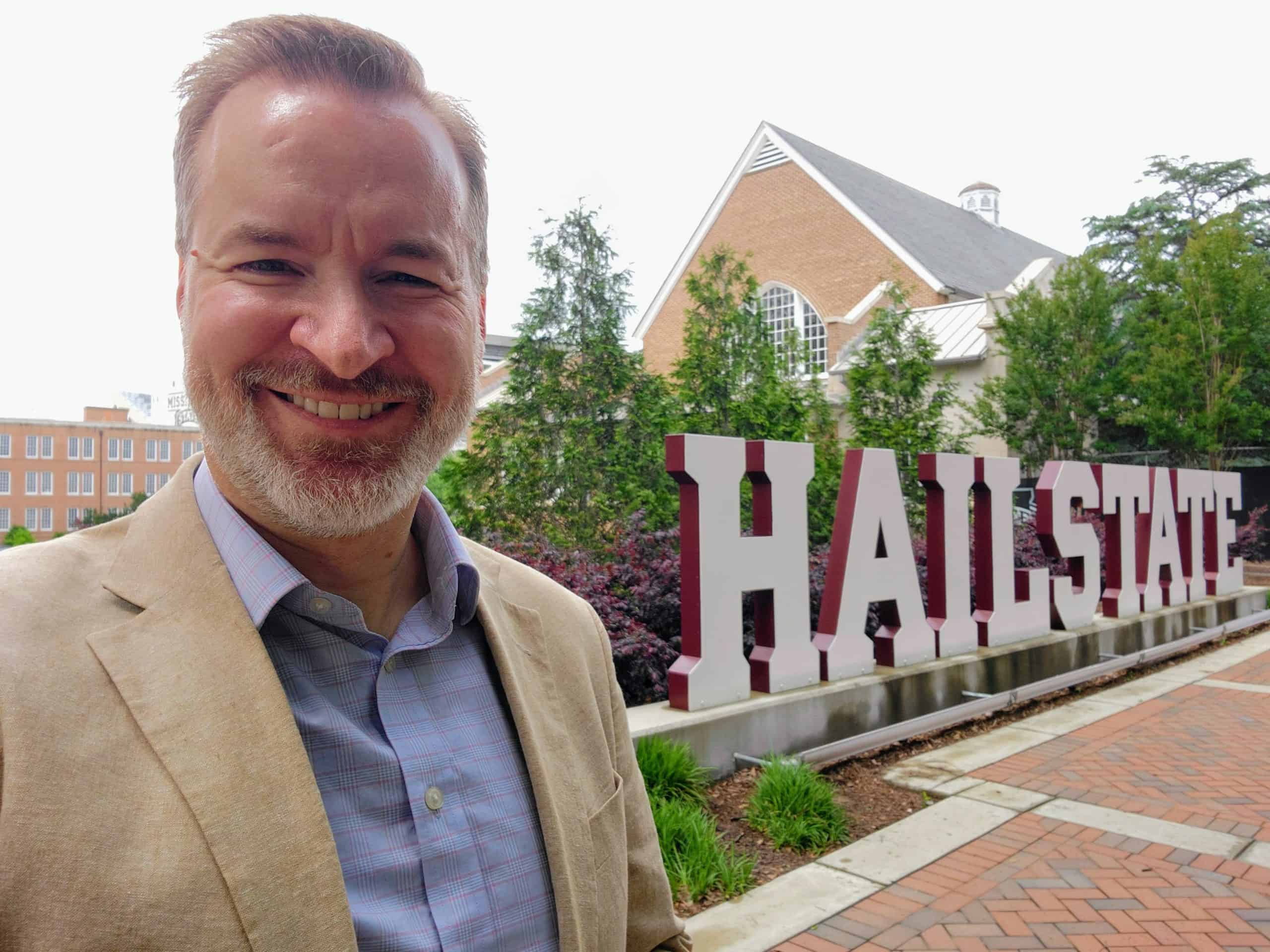
Gene Scholtens

One of the awesome things that has happened since I started my list of reed books in musicals is that great people from all over the world have contacted me to contribute to the list. These contacts are always a pleasure for me personally, and they serve to make the list more accurate, complete, and useful for others.

I have a number of regular contributors who contact me periodically with updates, and until recently the record was nearly twenty individual contributions from one much-appreciated person.

That record was shattered when, a few months ago, I started getting emails from Gene Scholtens. The first email was a small correction for one show, but then the floodgates opened. Gene revealed that he has been playing woodwinds in Broadway orchestras for over thirty years, and has been keeping his own very comprehensive log of who plays which doubles on which shows. Gene’s contributions to my list at the time of this writing number a staggering 72.

As it turns out, Gene is not only a talented musician and a prolific record keeper, but also a very nice, humble, and generous guy, and graciously agreed to talk to me on the phone about his career. Here’s what he had to say. [Note: edited for length.]


BP: How many shows have you played?


GS: I’ve been playing on Broadway since roughly 1980. The last count was somewhere in the neighborhood of 90-95 shows.


Wow.


Most of my career, quote-unquote, has been as a sub. I’ve had what they call “my own” show, but most of the time I’ve been subbing. That’s partly because I always had a full-time job at Baruch College. I was in administration in the technical part of the admissions department. I left that two, almost three years ago now. Decided enough is enough. I’m semi-retired, but still playing.


What shows are you playing now?


I’m subbing on Sister Act, Wicked, Anything Goes, and How to Succeed in Business. I’m also part of Chicago, but haven’t done it in a while.


On average, how many shows do you play in a week?


If you counted the whole year, three a week. This week I’m doing eight, last week I did two. Sometimes it’s a whole week of Sister Act, like this week. Sometimes it’s four different shows in a week. It’s always different.


How did you get started on woodwind doubling?


It goes way, way back to when I was a kid. I started on clarinet when I was in fourth grade or something. A year and a half or two years later the school bought a new bassoon. It was a newer, shinier instrument—that was what I wanted to play. They offered it to somebody else, but I talked him into turning it down so they would give it to me.

I’m a bassoonist, mostly. That’s the one I studied in college. Everything else I did study a little bit, but bassoon was a major and everything else was definitely secondary. But I’m pretty good on all or most of them. I don’t like to hear myself play flute much, but they still pay me for it. I call myself a reed five player, because I’m always playing bassoon, baritone sax, and bass clarinet, and rarely have to play any exposed clarinet or flute.


How did you end up where you are today?


Well, I went to college, and graduated with a masters in bassoon in 1972 from the Univeristy of Illinois, Champaign-Urbana. And when I graduated I didn’t have any place to go or anything to do. But then I got a call from a friend with a lead on the college job. Basically I got hired over the phone to do the job, and so I moved to New York, the place I wanted to be anyway as a musician. I had a chance to come to New York with a job, and I had the job for thirty, almost forty years. And I started playing in New York. Originally I was mostly a bassoon player, playing in orchestras and chamber groups. Whatever paid at the time. And I always had liked playing shows.

I also liked doubling. I always said the reason I’m a doubler is because I have a very short attention span. I don’t like to play any instrument too long. Plus, it seemed to me there was more work for me as a doubler than as a straight bassoon player.

I was in New York for maybe seven years before I really got going on Broadway. Mostly just I don’t promote myself. I guess I didn’t know how to go about it, so I just kind of sat around. My first big break was on the original production of A Chorus Line. A friend of mine knew the assistant conductor there, and we both went down and sat in the pit for the fun of it, and watched a real Broadway orchestra play. I was introduced to Marvin Roth, the bassoonist. And maybe six months later I got a call from him, and he said, “Gene, I need you on Chorus Line. My sub died.” And I said, “Great!” I played the show for two weeks and decided I liked it, and liked all the guys, and they liked me. And I did a good job, I guess. And all of a sudden people started calling me. And I’ve been doing that for over thirty years.


What’s the worst part of playing on Broadway?


The worst part playing reed 5 is carrying the instruments. Showing up with a baritone saxophone, a bass clarinet, and a bassoon. And flute and piccolo and a clarinet or whatever the show takes. And the stands, too. You play one show or two shows, and you get on the subway with all those horns. It’s not much fun. I tell people I play the show for free—they pay me to carry all this stuff.


You probably get paid cartage, though, right?


No, no cartage for a sub. If you’re a regular, they will pay you cartage for a baritone saxophone for the rehearsal period. That’s it. And also if you’re playing two saxophones on a show, sometimes you play baritone and tenor, for instance, you only get paid for one saxophone. The other one is a freebie. It’s a strange thing in the union rules.


What’s the best part of playing on Broadway?


The best part is, at least for a sub, is playing different shows, and having lots of different people to be around. If you have your own show, probably the worst part of the show is boredom—playing the same show over and over and over. Never getting a chance to play anything else. Being around the same people. Everyone knows horror stories about sitting in the middle of two people who hate each other. And the longer the show runs, the more chance there’s going to be some bad blood. In fact, it’s almost like a given, the shows with the great people and the great attitudes and the great music are always the shows that close. The ones that are torture are the ones that last forever. Its not true, but sometimes it seems that way.


How is being a Broadway musician now different from when you started?


The people are much younger now. When I first started it seemed like everybody was older than me, in their fifties or sixties. Now I’m definitely one of the older people.

When I first started it was tough for musicians to take time off. The union has made many, many advances in that. In the contract you’re entitled to take off 50% of the shows if you want to, and send in a sub.

The money is a lot better than it was. The shows are a lot harder in general—there’s a lot more music. It used to be there was a song, then a book scene, then a song, then a book scene. Now a lot of shows have music for 90% of the show, so there’s a lot less downtime than there used to be.

There’s a lot more pressure. When I first started subbing, you would go in and watch a show, sit next to the guy you were subbing for and watch the conductor, and then play that night. You did as well as you could and everyone knew it wouldn’t be perfect. Now they give you a copy of the book to take home and practice for a month. Sometimes, they even give you DVDs of the conductor you can play along with. It makes it a lot easier to play a good show the first time, but the expectations of perfection are much higher.


Are there any characteristics, abilities, or habits that you should cultivate if you want to play on Broadway?


Well, I think the most important thing, and the thing I’m the least good at, is networking. A lot of it is a social thing. You have to be able to make people laugh, tell stories, get along, be a fun guy to go out with. Or girl—It’s not only men.

You have to be disciplined. You’ve got to go in and play eight shows a week, or at least most of them. And you’ve got to play the same thing over and over, the same way every time. You can’t ad lib. You can’t experiment.

You’ve got to know how to follow the conductor. Musicians come from all different directions. Some of us are classically trained, some are not. Some come from jazz or rock. For some of those guys, learning to really follow the conductor well is difficult.


Knowing what you do now, is there anything you would go back and do differently if you could?


I guess I would try to be more self-promoting. Almost every time I’ve said, let me call this guy and say “Hi, are you looking for anybody?” it has paid off. Know the contractor, call him every once in a while, and schmooze.

If I were new in town, I would call the people who are doing the shows, and say, “Can I take a couple lessons from you? I’m new in town, and I’d like to learn about the business. I’d like to hang out and talk to you, and see what suggestions you can make.”


Do you have any favorite woodwind-playing tips?


I’ve started using Legere reeds. Have you seen those?


Yes.


In the last couple of months I’ve started to use them a lot. Makes things a little easier if you’ve got five or six horns to worry about. And within the last couple of years I finally decided it’s smarter to buy bassoon reeds and not to make them. I made my own reeds all these years, and struggled through it. Wasted all that time and money.  I finally found a guy that makes reeds that I can live with, and I’m much happier.


Thank you so much for taking the time to talk with me.


Nice talking with you.


Similar Posts

  • What should be on your musician website

    It’s cheap and easy to create a website. Any serious freelance musician (or aspiring musician) should have one.

    This should be a website about you, an individual musician. It should be separate from your ensemble’s website or your academic institution’s website. It should exist long-term, and serve as a sort of permanent address for finding you online. If you do most of your online stuff on social media sites or on your organizations’ sites, that’s fine. Your individual website doesn’t have to replace or duplicate any of that. It can simply point people to those resources.

    I won’t go into any technical details here, because there is very extensive information available online about the ways to make websites. Suffice it to say that if you have only enough technical skill to send and receive email and post things on Facebook, there are website services simple enough for you to operate. Or if you want to roll up your sleeves and code every line from scratch, you can learn how to do that too.

    Here’s what you need, content-wise:

    Mandatory items

    • A domain name. Preferably this is something very simple and clear, like your name. Mine is bretpimentel.com. It works well because there aren’t a lot of Bret Pimentels, so web searches for my name usually put my site right at the top of the results.
      • If you have a more common name, you might need to add something meaningful to it. bretpimentelwoodwinds.com might work well, or bretpimentelmusic.com.
      • Pay for a real domain name. It’s not expensive. Something like bretpimentel.freewebsites.com looks unprofessional.
    • At minimum, a simple indication of what it is you do and how to contact you. That’s enough to be your whole website if you like. Here’s an example: “Bret Pimentel is a performer and teacher on the woodwind instruments: flute, oboe, clarinet, bassoon, and saxophone. Reach him at bret@bretpimentel.com.”
    • Some longevity. Go ahead and prepay the domain name and whatever hosting services you need for a good long time, maybe five or ten years, or set it up to renew automatically.

    Optional items

    • A more detailed biography.
    • A nice picture of you, especially one that helps reinforce what you do (like one where you’re holding your instrument).
    • Links to your social media profiles, YouTube channel, or other online things you want people to find.
    • Links to the websites of things associated with your career, like your performing ensembles or the institutions where you teach.

    Optional items with caveats

    Most of these things have to do with updating the content of your site on some kind of regular basis. That’s worth doing if your intention is to bring people back to visit your site again in the future. If you prefer to use your site as just sort of a digital business card, with no updating content, that’s fine too, and is much less effort to maintain.

    • A calendar of your upcoming performances. Only do this if you are thoroughly dedicated to keeping it up to date. An expired calendar makes your website look abandoned.
    • Recordings (audio and/or video) of some of your performances.
      • If you are hoping your website will help you get hired for things, only include recordings that you think appropriately and honestly reflect your current abilities.
      • Only post material you are certain you have the rights to post. For most individual-musician websites, chances are slim that anyone will take legal action against you for posting copyrighted material, but it’s still decent and polite to respect others’ intellectual property. (Acknowledging your non-ownership doesn’t make it okay to post something that isn’t yours. The copyright owner has to specifically give you permission or license the material to you in some way.)
    • A blog and/or some articles or other resources.
      • Again, this should be your own intellectual property or something you have explicit permission to post.
      • If you start a blog, start with a post that is about something, not a post about how you intend to start blogging soon, or asking people for ideas what to blog about. Lots of blogs start that way, with a single post promising big things to come, and then nothing more ever.
      • You don’t have to blog on any particular schedule if you don’t want to, just post when you have something to say.

    Don’t include these

    • Lists of who you have played with, unless they are significant and career-defining.
      • As a graduate student I got to play at a university event honoring Dave Brubeck, including playing in an ensemble “with” him. For years my professional biography indicated that I had played with Dave Brubeck, even though after the one gig was over he almost certainly wouldn’t have remembered me, much less considered me some kind of collaborator. Listing him on my website was a pretty transparent inflation of the truth. (If he had hired me to join his quartet and go on the road for a few years, that would definitely be worth mentioning on my site.)
      • There have also been many less-famous names I have performed with, and why list those?
    • Lists of the equipment you use. One possible exception is if you have official endorsement deals that contractually require you to include this information. Otherwise, what is the list for? To prove how much money you have spent? To encourage others to blindly buy the same products as you?
    • “Links” lists, except in the rare case that your curation brings something valuable to the table. Lists of sites that you think are interesting or somehow related to your site are an artifact of earlier days of the web. Now if people want to find sites related to a topic, they just do a web search or follow related entities on social media.
    • Gratuitous photo albums, unless there’s a good reason to post them. Being attractive and/or vain isn’t a good reason, if you are hoping people will focus on what you have to offer musically. And you do need permission from the copyright holder.

    A simple website is part of the modern musician’s professional face—you need one the same way you need a phone number, an email address, and black clothes for the gig. You can start for a few dollars and finish in less than an hour, or spend years building it into a powerful communication outlet. Get started today!

  • From WindWorks Design: Wind controller in a pit orchestra

    Photo, mabel.sound

    “Gertjan” at the WindWorks Design blog posted some interesting comments about using a wind controller in a local production of Seussical the Musical. Gertjan (I wasn’t able to positively identify him from the WindWorks website, but maybe he will find his way here and let us know who he is) played saxophones in the show as well, and used the wind controller to cover a number of wind and non-wind instrument parts.

    Although it gives me a little indigestion to see a wind controller substituting for woodwinds that might otherwise have been played by a doubler, I do think there is application for wind controllers in orchestra pits. Keyboard-driven synthesizers are ubiquitous in recent shows (or are sometimes used to replace other instruments, especially a string section), and, in some cases, a wind synth might be even better suited to certain kinds of synthesizer parts. Gertjan mentions some synthy sounds like “vocal doo,” “scary voices,” and “ghostly shimmering breathy sound,” all of which strike me as likely to be very effective with a wind synthesizer’s breath control. Some others, like “harp” and “tinkle bell” seem like they might be more intuitively assigned to a keyboard. Read More “From WindWorks Design: Wind controller in a pit orchestra”

  • Conrad Asklund on finding woodwind doublers

    Photo, davekellam

    From a blog post by musical director Conrad Asklund back in 2006:

    How do you find woodwind players that can each double on 4-5 instruments?

    You can’t—assuming you do not have a budget to hire session players (which really, only session or union players are going to be able to pull off all those doubles professionally) and are not near a major city with access to players like this.

    Hey Conrad, call me!

    Read the whole thing

  • Common doubling combinations from the Broadway doubling list

    The most popular thing on my website is the Woodwind doubling in Broadway musicals page, which brings in visitors from around the world. I’ve even been lucky enough to hear occasionally from major woodwind doublers who are working on Broadway.

    I thought it might be interesting to take a look at the most common combinations of instruments called for. I’m including a table at the end of this post that shows every combination that occurs 10 or more times on the current version of the list. The first column numbers the rows for convenience in referring to specific data; the second column indicates how many times that particular combination occur. Read More “Common doubling combinations from the Broadway doubling list”

  • Students and gig pay

    Over a year ago I wrote about responding to free or underpaid gig “offers.” A commenter asked a fair question, which has haunted me since:

    I was wondering how much of this still applies when taking on gigs as a student.

    I’ve wrestled with this a bit and I’m not sure I have a real answer, but I do have some thoughts. (As usual, I’m talking here about markets that don’t benefit from a strong union presence, such as most of the USA.)

    For someone hiring musicians for a gig, I don’t see a good reason to consider student status at all. You should hire musicians who can do the job, and should pay them fairly. If they are students, what does that have to do with anything?

    photo, Ryan Hyde

    But the Right Thing to Do seems a little less clear from the student perspective. In a situation where someone is attempting to treat student musicians (or anyone) in an exploitative way, the options are to accept, to attempt to negotiate better terms, or to refuse the gig. The problem is that freelance careers depend heavily on word-of-mouth recommendations, and being “easy to work with” is a prized quality. A student musician trying to get a foothold in the business could hurt his or her cause by complaining about unfair pay, or by staying home instead of playing.

    Student musicians have to find the best balance they can between advocating for fair treatment and going with the flow. It’s not reasonable for the least-experienced musicians to have to navigate such a complicated thing with their careers hanging in the balance, but it’s the way things are.

    Here are some questions you might ask yourself if you’re a student musician and think you’re being undervalued in the professional freelance marketplace:

    • Who else is on the gig? Would this be a genuine opportunity to make some connections and let some other musicians hear what you can do? Are those musicians the kind who might be able to offer you future opportunities in the near term, or are they others who don’t have much of a career yet?
    • Do you have peers who have taken this gig in the past? Did it pay off in terms of “exposure” or future gigs?
    • Is the experience something that would look good on your word-of-mouth “résumé,” or would it be kind of an embarrassment?
    • Do you have a trusted friend or mentor who is more established in the business, who can advise you on this specific situation? The music world is a small one, and someone who knows the local freelance scene might be able to offer some background.

    Be careful of talking yourself into free or below-market gigs because you “just want to play.” That kind of attitude serves you well in school, but not so well when you’re trying to make a living, and it drags down other musicians’ ability to make fair money and pay their bills.

    A parting thought: I certainly did some free and underpaid gigs as a student, and in some cases that may have opened doors to better opportunities. (It’s hard to connect the dots definitively.) But I think those of us who are established as freelancers should be careful about treating unfairness as a “paying dues” rite of passage. Shouldn’t we be using our success to make things better for the next generation of musicians?

  • |

    Becoming a professional musician

    Sometimes when my students get paying engagements for the first time, I joke with them that they are now “professional” musicians. That’s true in a sense, but I think there’s more that goes into being a true professional.

    If you are a college student aspiring to be a professional musician, here are some things you might ask yourself:

    • Am I reliably on time to things?
    • Do I always have a pencil? Extra reeds? Whatever else is needed?
    • Do I show up to rehearsals with my parts learned and ready?
    • Am I self-motivating when it comes to practicing?
    • Am I pleasant and cooperative on a gig or in a rehearsal?
    • Am I easy to contact, and prompt about replying?
    • Is my closet stocked with clean, sharp gig apparel?
    • Do I keep my instruments well-maintained?
    • Do I have a sense of what my time and talents are worth, and a firm but polite way of expressing that?
    • Do I meet and exceed my teachers’ expectations?
    • Am I willing to play any part, including the less-prestigious ones? Am I willing to put my best into supporting someone else’s solo moment, even if I think that opportunity should have been mine?
    • Have I recorded myself lately? Did I come away from it with some ideas of what needs improvement?
    • What are the most common issues my teachers or ensemble directors mention about my playing? Am I addressing those in a focused way?
    • Am I responsive to useful criticism, thick-skinned against non-useful criticism, and able to tell the difference?
    • Is there anything about my playing or demeanor that would cause stress to someone who hired me for a gig? Am I currently stressing out my teachers, directors, or fellow students?

    Graduation from college doesn’t guarantee you any gigs. Become the person that other musicians want to work with.

One Comment

  1. Hi

    I was just reading this article and found it quite interesting. You said at the start it was cut short but is there anyway I can get the full version??

Leave a Reply

Your email address will not be published. Required fields are marked *

Comments that take a negative or confrontational tone are subject to email and name verification before being approved. In other words: no anonymous trolls allowed—take responsibility for your words.

This site uses Akismet to reduce spam. Learn how your comment data is processed.