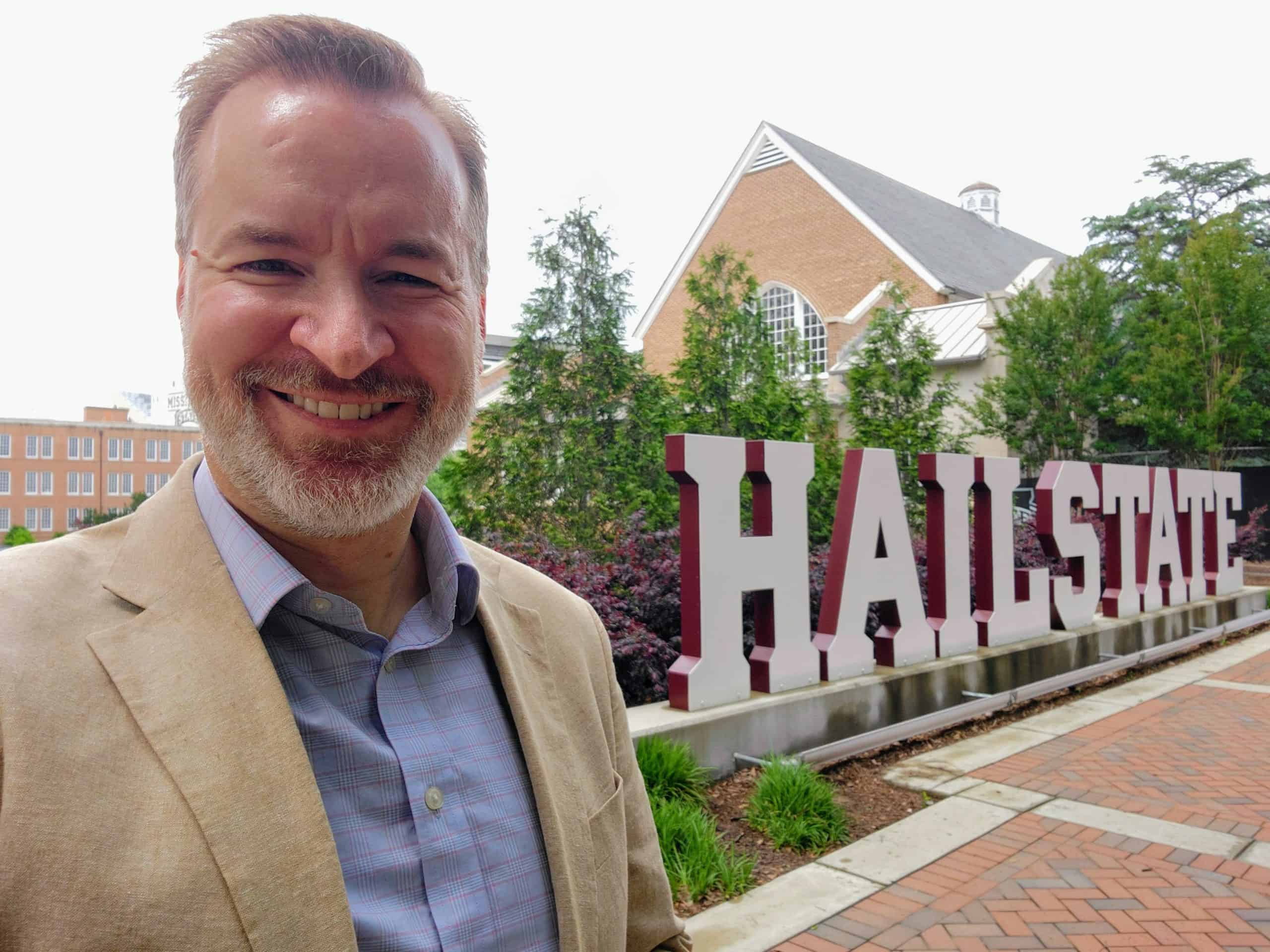
Interview: flutist Tammy Evans Yonce

Disclosure: As an Amazon Associate I earn from qualifying purchases, at no cost to you.

Flutist Tammy Evans Yonce is an active recitalist, writer, clinician, speaker, contributor to various conferences and professional organizations, and professor at South Dakota State University (plus: she is my former classmate). Her thoughtful blog is a favorite of mine and my regular readers will recall that I have featured her posts on a number of occasions. Her debut CD will be released earlier next year—keep an eye on her website and Twitter for details.

I am always particularly amazed by her brutally busy performance schedule, and she kindly agreed to let me pick her brain about it.

How often do you perform?

I do an annual fall tour, which includes multiple performances and masterclasses. This year it was to Virginia, North Carolina, and Tennessee. Sometimes I choose these places because it’s a geographical area I want to explore or because I have friends and collaborators there. This year’s tour included collaborations with some really fantastic friends. I’ve been able to perform in 24 states so far, so that’s been fun.

I always give one on-campus recital each year but also frequently collaborate with colleagues on theirs.

Other performances include festivals, conventions, and such. I like giving 15–20 performances per year.

How do you maintain such a busy performance schedule, on top of teaching full time, having a family, etc.?

It mainly comes down to organization and clearly defined goals. And making consistent progress every day. I work in big six-month chunks, where I have goals listed in a variety of categories (performance, writing, recording, commissions, etc.). Those goals help me organize my day-to-day decisions, and they also allow me to stretch beyond what I think I’m capable of.

I have some general long-term goals but I think the nature of my work (music + academia) means that I can’t anticipate all opportunities that might arise, so I try not to be too rigid about those long-term plans. My upcoming fellowship to Israel came out of left field, for example, so I try to keep my eyes open.

I also have a really supportive husband who carries his share (plus some, probably) at home so I have some flexibility.

How does your performance schedule affect you? What benefits or drawbacks are there to a busy performance calendar?

I enjoy travel and find it invigorating. It helps me to break up my schedule, see new people and places, and be in a different environment, and it certainly helps my teaching. I enjoy collaborating with friends.

Performing frequently has effectively eliminated performance anxiety for me. There’s just not time to be nervous and I have a lot of hours banked actually on the stage. I’ve “practiced” performing so much that I can stay in the moment. Since creation and analysis are completely different processes, if I can stay in the moment I’m not worried about analyzing my performance as it happens.

Being busy might be considered a drawback for some but I feel like the things I do are a worthwhile use of my time. I don’t do things just to have something to do.

How do you maintain balance in your career and life?

I have a couple of trusted people who understand me and my goals that I check in with regularly. We make sure that we’re staying on track. Also, I don’t check work email after 5pm or on the weekends.

Do you have any self-care or stress-reduction practices?

I get regular massages. I used to see this as a luxurious indulgence but being a musician does take a physical toll. I like good food, I travel as much as I can, and I try to work with my friends whenever possible. Finally, I read a lot. I read at least 25 books a year.

You frequently commission new works. How do you connect with and select composers?

Sometimes I’m approached by composers who hear me play and have an idea of something they’d like to write. Other times there are composers I know I’d love to work with, and I approach them. Most of these connections happen either online (Twitter, usually) or at conferences and festivals. Even if I haven’t met a composer, it’s likely that I’ve seen them around online or have mutual friends, so there’s usually a connection.

Generally I work with the composer during the compositional process. We meet via Skype or FaceTime so I can try out their ideas or they send sketches as the piece progresses, so I have a good idea of what the piece is before it’s done. The composers I work with want things to work, so if something is awkward or impractical, we find a solution.

You have done some performing and commissioning with the Glissando Headjoint. How does this play into your career? Is it bringing you opportunities that you wouldn’t have otherwise? Does it cause you to be pigeonholed?

The Glissando Headjoint has been a lot of fun. I don’t think it has helped or hindered me. I see it as another item in the toolkit I can use to get the musical message across. Since there isn’t much repertoire for it, it has been fascinating to see how composers use it. They are really drawing from their own creativity instead of basing their musical decisions on existing repertoire.

When programming, how do you balance new repertoire with previously-performed works?

Big considerations are the audience, the logistics of the performing venue, and whether or not I have collaborators available.

My recitals have taken a big turn lately and are much more logistically complex. Last month’s recital featured dancers, lines of poetry projected in real time, a lithograph displayed during one piece, multiple collaborators, and a variety of equipment changes. While it was complex, I think it was effective.

I’m already planning next year’s recital, which will involve literature, readings, photographs and other visual art, and several new commissions. Once I get the plans in place, I’ll put more info on my website. I like the impact of a cohesive recital that involves more than just the ears.

Do you have any favorite flute-playing tips?

Practice. You can’t go wrong with lots of etudes and Taffanel and Gaubert.


Thanks, Tammy, for taking the time to answer some questions! Find her at:

Similar Posts

  • Interview: Sal Lozano, saxophone and woodwind artist

    Sal Lozano: Everything's Gonna Be GreatLately I have been enjoying Sal Lozano‘s recent CD, Everything’s Gonna Be Great (available from CD Baby and iTunes). The album is 13 charts by Tom Kubis for 5-piece saxophone section with rhythm section, and Sal plays all five of the saxophone parts. It’s a lot of fun, Sal sounds great, and there’s an all-star lineup of guest soloists.

    Even if you don’t know Sal Lozano’s name, you have almost certainly heard him play saxophone and woodwinds. He has recorded with artists ranging from Paul McCartney to Stevie Wonder to Christina Aguilera to Mel Tormé, played on movie scores for Disney’s Beauty and the Beast and National Treasure, and performed in TV orchestras for the Academy Awards, the Emmy Awards, the Grammy Awards, American Idol, and Dancing with the Stars, among many, many other projects. He plays in Gordon Goodwin’s Big Phat Band, which just picked up another four Grammy nominations to add to an already-impressive list. (Also check out my interview with Big Phat Band saxophonist Jay Mason.) Sal also teaches at California State University, Long Beach, is a clinician for Disneyland music education programs, and is available for masterclasses and clinics.

    Sal is very generous with his time and expertise, and was kind enough to answer some questions about his work and his new album. (He also asked me to let my readers know that they are welcome to contact him.)

    Photo courtesy Gio Washington-Wright. Used with permission.
    Photo courtesy of Gio Washington-Wright. Used with permission.

    What you do for a living?

    “I’m a sax player.” That’s what I say to anyone who asks. I also teach saxophone at the university level. Just private students, about six, which has paid for my daughters’ education.

    What education (formal or otherwise) and experience prepared you for the work you do?

    I studied at California State University, Long Beach as a performance major on saxophone. Four years of private lessons with Leo Potts. Prior to that I studied with Greg Adams at a music education studio owned by Gary Foster. After college I studied flute with John Barcelona and Jim Walker (he kicked my butt). Then clarinet with Jim Kanter. I also have enjoyed playing in ensembles for many many years which is just as much a learning experience as any teaching I’ve had. I also started playing at Disneyland when I was 19 and that was a great learning experience. Too much to talk about now.

    If you could do it over, is there anything you would have done differently to prepare for your current career?

    Interesting. (This is my third rewrite of this question.) I’m not sure I knew of a plan then. I just wanted to play. Having said that, I wish I could have learned a little more theory and harmony, but maybe things happen for a reason.

    What is a typical work week like for you?

    Long tones. Oh… work? It’s all “maybe…” Maybe a recording or two (motion picture, TV show, CD recording, etc.), or if I’m doing theater my nights are busy with that (usually six nights a week if I happen to have a theater run). Teach on Friday. Perhaps a concert with the Phat Band, which is mostly out of town. That band is a lot of fun and travels well. Sometimes weeks can be very busy and some are sporadic. However, I try to do something musical every day.

    What projects are you excited about right now?

    I have the new CD out and have been getting great response. I am hoping to put out a playalong book based on the tunes on the CD. In April I will be on a solo tour in Japan playing with several local big bands. I’m also in the orchestra for the Oscars so things are great right now.

    What instruments do you consider part of your current professional toolbox?

    I play all the saxes, flutes, clarinets, whistles, ethnic flutes, and the EWI.

    Are there others you are working on or would like to add at some point?

    I was asked to play the ocarina last year on a Robbie Williams CD so I learned that. This year I’m on a project where I’m playing a bamboo sax from Argentina. Another calls for the shakuhachi flute so I may learn that.

    Do you self-identify as a “doubler?” A saxophonist who doubles? Something else? Is it your intention to play all your instruments equally well, or are there one or more that you would prefer to focus on?

    I’ll answer these in order: no, no, yes, and all equally well. To explain, I consider myself a woodwind player (I know, I don’t play double reeds, I tried and said “no”). When I pick up the sax, I’m a sax player; flute? a flute player, etc. That’s the attitude I’ve taken when approaching these instruments. I dive into the deep end when playing these because most of the time I’m sitting next to great players who only play flute, clarinet, oboe, etc. Many remarkable players.

    What kinds of teaching/educational activities are you involved with?

    I teach at California State University, Long Beach, which is a four-year university, teaching private saxophone lessons. For about 23 years I also have been a clinician for a program at Disneyland called Disney Performing Arts where we take students through a 1½ hour recording session, reading music written for that level and recording a soundtrack of a short clip of a Disney animated motion picture. We use a click track and everything that is involved with recording. Great program because the students react quickly when they hear themselves on the soundtrack. It turns out that they fix problems quickly. I also enjoy very much going across the country and playing with music schools of any type. Clinics, masterclasses, etc. I really get a kick out of that and would like to do more.

    What is the best part of your job? What is the worst part?

    The best part is playing music. Doing something I love to do. Hanging and playing with great players and writers and the joy of watching a student excel and succeed. Not sure if there is a worst part because I really enjoy it.

    Do you have time for other interests, hobbies, etc.?

    Oh yes. MLB baseball. College hoops.

    Your new album is in sort of a Supersax vein, with a big-band-style saxophone section playing with rhythm section and guest soloists, but you recorded all the saxophone section parts yourself. How does that process compare to recording section parts with other saxophonists?

    Well, first of all, I didn’t have to tell anyone in the section where to breathe and how to phrase. No one shows up late or has to leave early. I don’t have to tell the second alto he’s playing too loud. Tom Kubis told me he had written these charts and wanted to record them with the guys in the big band. I told him that I would record all the parts, and that was it. It is really fun to play in a section, or play chamber music where you have to listen and react.

    In the liner notes, Tom Kubis (who wrote all the charts) compares your lead playing to Marshal Royal and Jerome Richardson. Does that ring true to you? Do you have other favorite lead players?

    Marshal is one of my idols and heroes. I had the honor of sitting next to him with the Ray Anthony big band and he still commanded a lead alto presence in his mid- to late 70’s. He was the first guy I heard way back in junior high school and I was hooked. I’m a huge Basie fan and collect bootleg recordings from the 50’s of that band with Marshal playing lead. Great sound, great time. Jerome was a great influence while he was with the Thad Jones/Mel Lewis big band, especially on soprano. There is a huge list of lead alto players I love. The list is quite extensive and it wouldn’t be right to start to list because I can’t think of all of them. They all have this confidence in their sound, the way they go from one note to the next, in many, many styles, not just traditional big band.

    Some of the charts on the album use the “standard” alto/alto/tenor/tenor/baritone saxophone section, but some use the less-common soprano lead. Any thoughts on soprano vs. alto as lead instruments? Other than paying dues on the horn, are there any other special considerations when you play lead soprano?

    To me? Soprano saxophone requires a hard reed and a slightly open mouthpiece. Mine is an old S80 Selmer E with #3 traditional Vandoren reeds. I need to have the resistance to help me get from one note to the next and hold the pitch and sound I want. I’m not going to change this setup, only the reed. This goes for any playing situation. I most certainly put more air into lead alto playing than I do soprano.

    Although the album seems to feature you primarily as a section player, you do take some nice solos, including one on flute. Are you as comfortable improvising on your doubles as you are on saxophone? I think a lot of doublers (myself included) really learn to improvise on the saxophone, and then discover that the vocabulary and fluency don’t automatically transfer.

    I would suggest learning technical patterns on the other instruments as you would with saxophone. However, my overall objective is to play flute and clarinet with more of a “classical” approach, so I have had to catch up when improvising on those instruments. Listening to great jazz flute and clarinet players as much as I have listened to “classical” players is quite helpful. I have to remember that each of these instruments requires its own discipline, which is why I don’t consider them “doubles.” It just doesn’t work that way for me.

    Any other behind-the-scenes information about the album that you would like to share?

    For this project we started with bass and drums and a scratch lead alto/soprano part. Then, the following week, I sat down and played the parts, which took two six-hour days to play 13 charts playing all five parts on each. Eventually we added soloists, guitar, percussion, and piano.

    What advice would you give to aspiring musicians who want to do the kind of work you do?

    Practice everything, learn to write, arrange, play the piano, enjoy what you do, get into teaching once you feel comfortable in your playing. With the computer age, ProTools or other recording software makes it very easy to record anywhere.

    So, with that comes a responsibility to music. Practicing scales with a metronome, playing long tones with a tuner. The reason is that these recording techniques require us to play along with instruments that are fixed pitched. Record yourself using GarageBand on a Mac or the PC equivalent and it will become apparent. [Ed. note: Audacity is one free, basic recording program for Windows or Linux computers.]

    Play in every situation you possibly can, listen to music. A lot. To anything.

    Do you have any favorite woodwind doubling (or general woodwind-playing) tips?

    One thing I began to realize when studying was that the approach to putting air into these instruments grew to be similar. How I phrased and how I went from one note to the next and playing everything between the notes sort of became the same to me. Obviously embouchure is different but the air thing became the same.

    Get a great mouthpiece/reed combination as soon as you can. Look for a decent flute or maybe a head-joint. Ask around, try out everything.

    As you play keep in mind four things:

    1. When you read music, the second time you see it you are no longer sightreading.
    2. Listen.
    3. Count.
    4. Always look for beat one.

    Thanks, Sal, for the music and for taking some time to share a bit of your experience and expertise!

  • Getting gigs on woodwind doubles

    Here’s a question sent to me recently [edited lightly]:

    Do you have any advice on getting gigs on doubles? I play all the major modern woodwinds, but I’m definitely an oboe/English horn player first, and saxophone is my strongest double. I wouldn’t say I’m the best flute or clarinet player, but I’m good enough to gig or perform solo repertoire. I never get gigs on anything but oboe/English horn or saxophone, which makes me feel like I’m wasting my time practicing anything else.

    Here are a few things to consider:

    Firstly, hopefully it goes without saying, but continue developing your skills on your doubles.

    Developing a reputation in your local market takes time. Plus, your local ecosystem of musicians and gigs is a factor outside your control. For example, if there is already an abundance of well-established clarinetists in local contractors’ contact lists, then it may just take time before you get a shot.

    Get to know the players in town who are doing the kind of gigs you want, and establish professional acquaintances with them. There’s also a time-honored tradition of taking a “lesson” or two with top local players so they can see what you’re capable of, and potentially recommend you for gigs (plus you might learn something).

    Check in with contractors or other hirers you may be working with already. You could say something like, “Hey, I’ve been doing so much oboe and saxophone lately work that I’m not sure people realize I’m a strong flute and clarinet player, too. Just wanted to make sure you have that info in the back of your mind. Thanks!”

    Also consider what you are or aren’t doing to sell yourself convincingly as a doubler. I checked out your web presence, and found social media usernames and profile pictures that identify you very clearly as an oboist, plus some vague, apologetic hints that you are also woodwind doubler. Some humility is good, but if you want to work as a flutist then it helps to tell people you’re a flutist.

    You also do not have a personal web page, or not one that I could quickly find. That’s your digital-era business card. (Consider getting some actual business cards, too.) It should state clearly what you bring to the table, and ideally provide some evidence. If I visit your website and it doesn’t mention the bassoon, or it mentions the bassoon but has audio/videos of you playing everything but the bassoon, then I’m unlikely to consider you a hireable bassoonist. If your bassoon playing is only so-so, I might still need you for a gig that has less-critical bassoon parts, but hearing you play something gives me some reference point for what you can do. As a next-best thing, you can provide an easy-to-find, easy-to-skim list of some gigs you have done in recent memory.

    Find appropriate opportunities to offer your services on additional instruments. “Hey, I have my flute with me today, and I can cover that third part if you like.” “I was thinking maybe this passage would sound good on clarinet. Mind if I give it a try in rehearsal?” Don’t push it to the point of being annoying, and be a good sport if the person in charge wants you to stay in your lane.

    Good luck!

  • |

    Becoming a professional musician

    Sometimes when my students get paying engagements for the first time, I joke with them that they are now “professional” musicians. That’s true in a sense, but I think there’s more that goes into being a true professional.

    If you are a college student aspiring to be a professional musician, here are some things you might ask yourself:

    • Am I reliably on time to things?
    • Do I always have a pencil? Extra reeds? Whatever else is needed?
    • Do I show up to rehearsals with my parts learned and ready?
    • Am I self-motivating when it comes to practicing?
    • Am I pleasant and cooperative on a gig or in a rehearsal?
    • Am I easy to contact, and prompt about replying?
    • Is my closet stocked with clean, sharp gig apparel?
    • Do I keep my instruments well-maintained?
    • Do I have a sense of what my time and talents are worth, and a firm but polite way of expressing that?
    • Do I meet and exceed my teachers’ expectations?
    • Am I willing to play any part, including the less-prestigious ones? Am I willing to put my best into supporting someone else’s solo moment, even if I think that opportunity should have been mine?
    • Have I recorded myself lately? Did I come away from it with some ideas of what needs improvement?
    • What are the most common issues my teachers or ensemble directors mention about my playing? Am I addressing those in a focused way?
    • Am I responsive to useful criticism, thick-skinned against non-useful criticism, and able to tell the difference?
    • Is there anything about my playing or demeanor that would cause stress to someone who hired me for a gig? Am I currently stressing out my teachers, directors, or fellow students?

    Graduation from college doesn’t guarantee you any gigs. Become the person that other musicians want to work with.

  • What I learned going back on the academic job market

    In 2009, I finished a doctoral degree in music performance, and landed a job at a small university in a rural area. Like many young academics, I assumed it would be a stepping stone.

    In those early years, I interviewed for a number of other positions, and generally found that they would be lateral moves. Most of the schools interested in hiring me didn’t pay any better, weren’t any better-located, and didn’t offer a better match for my skills and interests. I stayed long enough to earn tenure, receive a couple of promotions, and carve out a role that suited me well. I also married someone with ties to the region. We bought a house and made plans to stay.

    In 2024, the university announced some serious cuts to academic programs as a cost-saving measure. Each degree program was reduced to a series of metrics in a spreadsheet, and sorted by a calculated financial “value.” Music departments don’t fare well under spreadsheet scrutiny, since we do much of our teaching one-on-one or in small groups, and always need more money for scholarships, grand pianos, and travel. My department was cut, and most of the music faculty, including me, were given one terminal year before being laid off.

    I didn’t expect to be back on the job market mid-career, but things worked out surprisingly well. During that terminal year, my workload—and frankly, my motivation—lightened enough that I had time to also teach part-time at a not-too-far-away, much larger, and more reputable university, due to the sudden retirement of one of their faculty. That put me in good position to interview for the full-time job when it was listed. I was offered the job, accepted the offer, and started in fall of 2025.

    I really couldn’t have been more fortunate about how things worked out, but while things were still up in the air I did find myself facing down some scary realities. While I definitely don’t have all the answers, I’m sharing my experience here in hopes it might be helpful to someone else.

    What seems to have helped me was a combination of luck and an understanding of how music professors get hired. The job market is shrinking and shifting; many variables are beyond anyone’s control. But some are not. You can’t control where positions open. You can try to apply where the fit is genuine and make a case for why that fit matters.

    My first concern was whether I would find jobs to apply to at all. The academic music job market is bleak—too many qualified folks, not enough positions, and job descriptions that are frustratingly specific. Even for woodwind openings (my area), some required background I don’t have, like in wind conducting, marching band, or music theory.

    Then there was the question of where. Preference usually isn’t much of a factor in academic job searches; you go where the job offer is. One possibility I did an early-stage interview for was in an extremely expensive city that would have meant downsizing. Another was in a more affordable area, but with weather that would have meant retooling our entire lifestyle. Finding a good fit less than three hours away—and actually landing it—was far more than I could have hoped for.

    There was also the matter of age and rank. While schools aren’t supposed to consider age, it can be an unspoken factor. I have many good teaching years ahead—but not as many as the freshly minted doctorates also applying. (A mentor even suggested shaving my greying beard to look younger.) My rank as a full professor may also have caused concern that I would expect title, salary, or autonomy that some institutions could not accommodate. One job that seemed like a no-brainer fit never progressed to an in-person interview, and the job went to a much younger (excellent and deserving) candidate. I can’t know why, of course, but I have to wonder.

    On the other hand, I had the much-in-demand “college teaching experience” required in so many job listings. Having served on and chaired hiring committees, I’ve seen applicants without relevant teaching experience get dumped straight into the “no” pile. (For that reason, I strongly suggest that graduate students seek out teaching assistantships or part-time adjunct positions, even if unglamorous or inconvenient.)

    Maybe more importantly, I knew how to frame my candidacy better than when I was a new DMA. In those days I leaned heavily into my nerdy academic interests and my high-minded teaching philosophies. This time, I focused on recruitment strategy, experience working with diverse (and sometimes underprepared) student populations, and a track record of collegiality and flexibility. I tried to present myself as a candidate who could help solve practical problems for my future colleagues and department. Artistic excellence matters, but it’s not enough.

    The opportunity to teach part-time at the institution before the full-time search was likely helpful. I built relationships with faculty, and did a lot of driving back and forth to support recruitment events and student performances. I learned the department’s priorities and pressures, and spent those hours on the road thinking about them. Recruitment and growth were central concerns, and I could show that I already had a local recruiting network that aligned with those goals, including former students now teaching in area schools.

    My younger self thought artistic excellence would determine my career trajectory, and that tenure would secure it. Mid-career me sees things differently. Tenure is not immunity from institutional change.

    I can’t claim to know exactly why I was hired at the new job. Hiring can be kind of a black box. But I do know that I approached the process with a clearer sense of institutional realities, and that I tried to make a case for how I could be useful within them. In a hiring landscape that can feel opaque, that was something I could control.

  • Endorsement deals

    First, let’s be clear about this: in an endorsement deal, the artist endorses the product or brand. The product or brand doesn’t endorse the artist. If an artist claims to be “endorsed by” a company, that is incorrect word usage.

    An endorsement deal means that an artist agrees to be publicly associated with a product or brand, presumably because the company thinks that will encourage more people to purchase their products. In return, the artist generally receives some kind of compensation, which often takes the shape of free or discounted products. The contract might specify some requirements for the artist to fulfill, such as having their name and image used in advertising, appearing at the company’s publicity events, or plugging products on social media. Read More “Endorsement deals”

  • Favorite blog posts, June 2025

    See the woodwind blogs I’m following, and suggest others!

One Comment

  1. Pingback: Tammy Evans Yonce

Leave a Reply

Your email address will not be published. Required fields are marked *

Comments that take a negative or confrontational tone are subject to email and name verification before being approved. In other words: no anonymous trolls allowed—take responsibility for your words.

This site uses Akismet to reduce spam. Learn how your comment data is processed.